Stop 5How it began
The story of Flo: how WiseGame was born.
Five short chapters, from the first question to the way it is made today.
1 Chapter 1 of 5
It began with a question
It began with a simple question: could the screen time children already enjoy become more purposeful, and give parents a better view of the thinking behind the play? Parents were listened to, and children were watched as they explored early games and met the same challenge in different ways.
What did you try first? What made you change your mind?
2Chapter 2 of 5
The first try flopped
The early instinct was to start by making an engaging game. An enjoyable game alone was not enough.
So the process changed: start with a clearly defined skill, draw on child-development expertise, then design the game and the observations around it.
3Chapter 3 of 5
Looking past the score
Two children can reach the same result through very different approaches, and giving every child the same next challenge does not always make sense. Children arrive with different experiences, strengths and support needs.
So WiseGame pays attention to patterns such as retries, persistence and changes in strategy. A useful next step is not simply harder or easier.
4Chapter 4 of 5
The parent puzzle
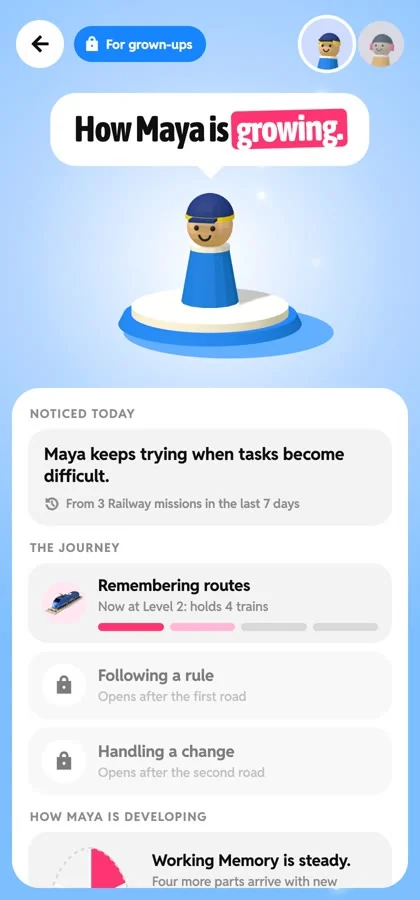
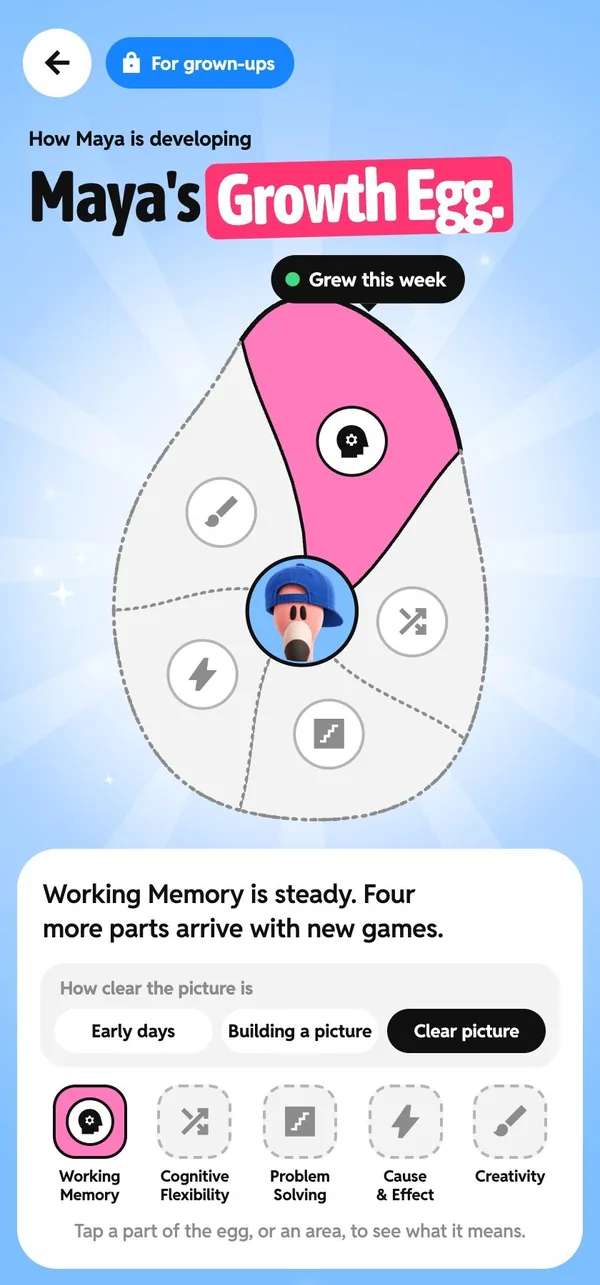
Parents kept asking what these observations actually mean in everyday life. So the parent view is shaped around plain-language patterns, what a child’s play may suggest, and simple activities to try away from the screen.
Parents need clear, useful context, not another number without an explanation.
Chapter 5 of 5
Shaped, tested, shaped again
WiseGame is being shaped through repeated design, feedback and refinement, with child-development expertise informing the skills, the games and the way observations are read. Each time a child comes back to play, another piece of the picture is added.
Progress makes more sense when you can see the journey, not just one moment.
 Railway
 Story Studio
 90%
 90%